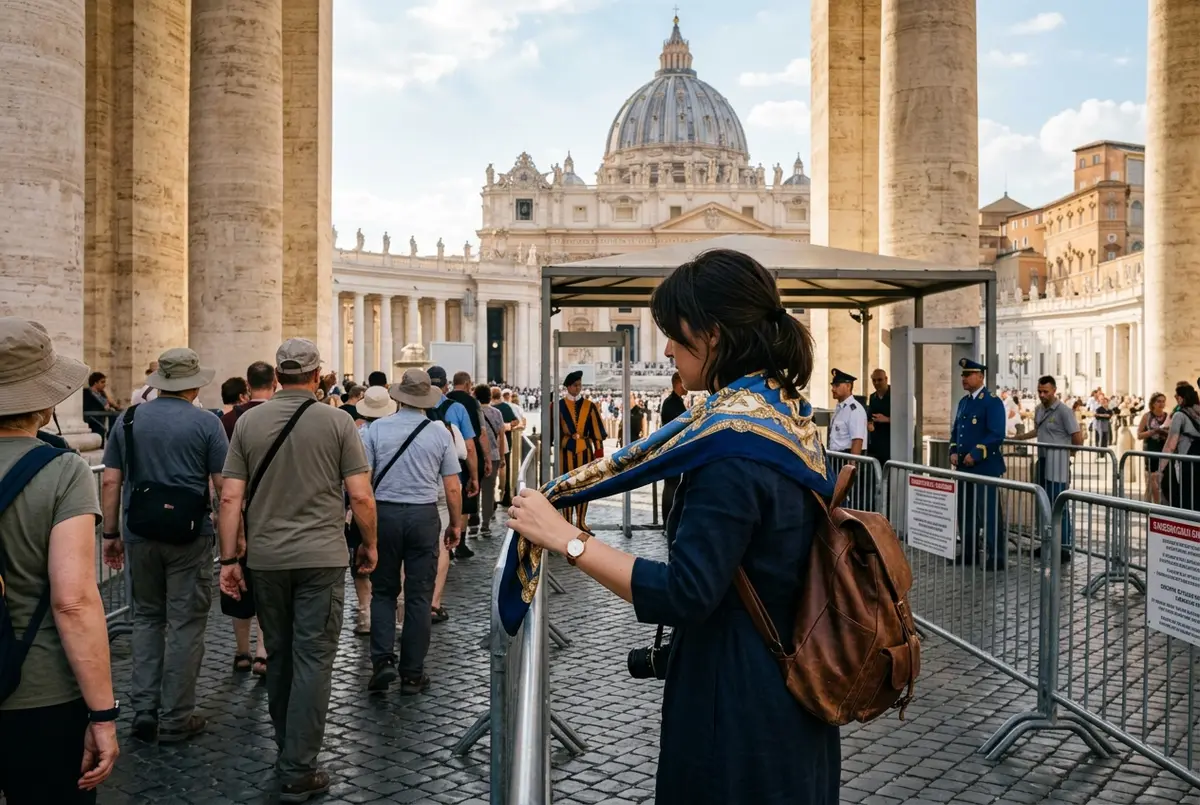
Clothing rules for the Vatican are the strictest, most consistently enforced part of the whole visit: shoulders and knees covered for everyone, no exceptions for August heat or a Basilica-only stop. Here’s what I’d actually plan for beyond just what you’re wearing, though, since clothing is only one piece of it: bag size limits, a no-flash photography rule, and phone-silent expectations apply across the entire complex, museums and Basilica alike. This page covers the fuller set of rules, with clothing summarized at a glance and everything else covered in full. If you’re still comparing the full vatican pass ticket lineup before you plan your day around any of this, the homepage tracks every current option in one place.
What are the actual clothing rules for the Vatican?
Shoulders and knees covered for every visitor, regardless of gender, season or which entrance you’re using. Shorts, short skirts, sleeveless tops and anything see-through get turned away at security, no exceptions made for weather.
I’d take this rule more seriously than any other on this page. I’ve seen enough accounts of travelers turned away after waiting through an entire security line to know this isn’t loosely enforced, it’s checked at the door every time.
Do the clothing rules apply to St Peter’s Basilica too, or just the Museums?
Both, identically. St Peter’s Basilica enforces the same shoulders-and-knees standard as the Vatican Museums, since it remains an active place of worship regardless of how many tourists pass through it daily.
I’d pack the same outfit plan for either stop. There’s no version of this trip where dressing more casually for one side of Vatican City and not the other actually works.
What bag rules should you know about?
Large bags and bulky backpacks are restricted and typically require checking or leave you facing a slower security screening. Small daypacks and purses are generally fine, but I’d travel lighter than usual on Vatican days specifically.
My honest take: I wouldn’t bring anything you’d mind checking or carrying awkwardly for hours. A big bag doesn’t just slow down your own security screening, it slows everyone behind you in the line too.
What are the photography rules inside the Vatican?
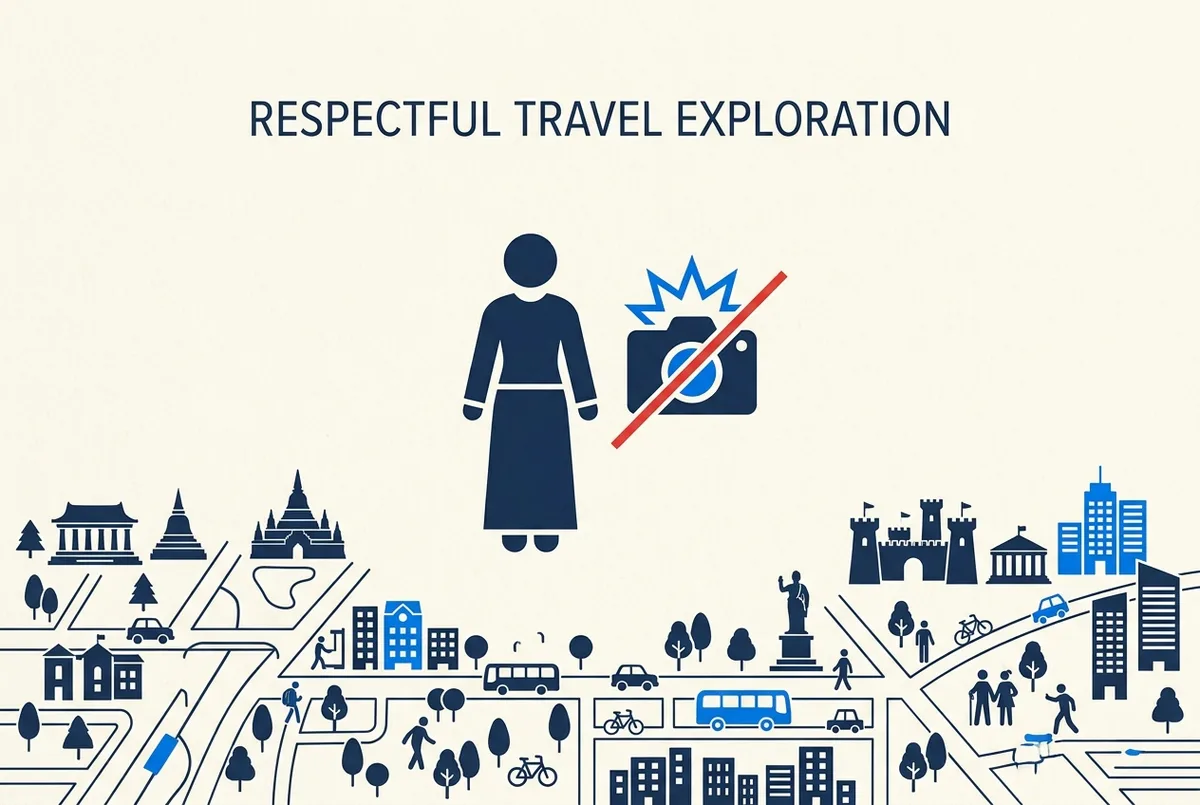
Photography is generally allowed throughout most of the Museums and the Basilica, but flash photography is banned everywhere in the complex, and photography of any kind, including phones, is prohibited inside the Sistine Chapel specifically.
I’d put the phone away entirely once you reach the Chapel rather than trying to sneak a quick photo. Attendants actively watch for this, and I think the no-photography rule there is genuinely worth respecting rather than testing.
Are phones and calls allowed inside the Vatican?
Phones are permitted throughout most areas, but attendants ask for silence inside the Sistine Chapel specifically, and taking calls or playing audio out loud anywhere in the complex is considered disruptive and generally discouraged.
I’d switch my phone to silent before entering either the Museums or the Basilica, not just the Chapel. It’s a small habit that keeps you from being the person a guard has to quietly approach.
What other conduct rules apply across the Vatican complex?
Respectful, quiet behavior throughout, since both the Museums and the Basilica sit within an active religious site rather than a purely secular museum. Eating, drinking anything other than water, and loud conversation are generally discouraged in the galleries and inside the Basilica itself.
I’d treat the whole visit with a bit more restraint than a typical museum trip. It genuinely changes the atmosphere for everyone else, and I think that’s a fair trade for the couple of hours you’re inside.
What causes the longest Vatican lines, and can rules affect that?
Underdressed visitors turned away and sent to change, plus the general ticket-office queue itself, are the two biggest contributors to long Vatican lines. Both are avoidable with basic preparation, wearing the right clothing and booking a timed slot ahead of time.
I’d genuinely credit clothing mistakes as a real, avoidable source of line delays, not just an urban myth. I’ve read enough accounts of travelers buying a scarf from a nearby street vendor at inflated prices to know it happens constantly and is entirely preventable.
Do the rules differ by season?
The core rules stay the same year round: clothing, bags, photography and conduct. What changes seasonally is how strictly the lines move and how crowded the enforcement points get, since peak season brings more visitors testing the same rules at once.
I wouldn’t expect any rule to relax in summer heat. If anything, I’d prepare more carefully for a hot-weather visit, since that’s when the temptation to underdress is strongest and the consequence, being turned away, is most disruptive to a tight itinerary.
Are there rules about food and drink inside the Vatican?
Eating isn’t permitted inside the galleries, the Basilica or the Sistine Chapel, and drinking anything other than water is generally discouraged throughout the complex. There are designated spots outside the main route where you can eat if you need a break.
I’d plan around this rather than fight it. A long visit on an empty stomach isn’t pleasant, so I’d eat a real breakfast beforehand and carry a small water bottle rather than assuming you can grab a snack partway through the galleries.
Do the rules change for large groups or tour groups?
Not the core rules themselves, clothing, photography, conduct all stay identical for solo travelers and tour groups alike. What changes is how tightly a guide manages the group’s pace and behavior, since guides are directly responsible for keeping their group compliant at each checkpoint.
I’d say this is actually a small point in favor of a guided visit if you’re at all unsure about the rules. A good guide flags a clothing or bag issue before you reach security, which is exactly the kind of last-minute problem I’d rather avoid entirely.
Is there a separate, more detailed dress code page worth reading?
Worth knowing before you pack: the clothing rule described here is the summary version. Gender-specific phrasing, what actually passes a borderline outfit, and practical workarounds like the scarf trick all deserve more space than a general rules page has room for, and I’ve written that detail up separately on this site.
I’d treat this page as the one to read for the full sweep, bags, photography, phones and conduct, and lean on the dedicated dress code detail specifically if clothing is the one thing you’re still unsure about before you travel.
What I’d actually pack and plan around
Pack for the strictest possible interpretation of the clothing rule, shoulders and knees covered, even if your itinerary is Basilica-only. Travel with a small bag, keep your phone on silent, and save the photos for anywhere except the Sistine Chapel. None of these rules are unusual once you know them, and none of them should derail your day if you plan ahead.
For timing your visit around the crowds these same rules create bottlenecks for, my best time to visit the Vatican Museums guide is worth reading next, and my St Peter’s Basilica tickets guide covers how the same rules apply on that side of the complex. For the current official schedule and any rule updates, the Vatican Museums’ official site is the source I’d check closest to your travel dates.
Frequently asked questions
What are the clothing rules for the Vatican?
Shoulders and knees covered for every visitor, with no exceptions for weather. Shorts, short skirts, sleeveless tops and see-through fabrics are turned away at security.
Can you bring a backpack into the Vatican Museums?
Small daypacks are generally fine, but large bags and bulky backpacks are restricted and slow down security screening. I’d travel as light as reasonably possible.
Are phones allowed inside the Sistine Chapel?
Phones are allowed, but photography of any kind is banned inside the Chapel, and attendants ask for silence throughout the room.
Do the Vatican’s clothing rules apply to children too?
Generally the same standard is expected for all visitors, though enforcement in practice tends to focus most closely on adult clothing at the security checkpoint.
What happens if you’re turned away for breaking a Vatican rule?
You’re typically directed to adjust your clothing, cover up with a scarf or wrap, or step aside, then rejoin the line once you meet the dress code. I’d pack a light scarf specifically to avoid this delay entirely.